пʼятниця, 17 червня 2016 р.

Munnar, Kerala, India

 Our next stop was the city of Munnar, but I did not see it. I fell ill with a high inlet temperature. Apparently, I caught some sort of virus. Our group went to the mountains of the vineyards. I lay in the hotel. Thanks to Eugene Ihelzonu and my good angel Briyu Dikov for the care that has helped me recover for a couple of days.

Munnar is a town and the station is located on a hill near Iddiki the southwestern Indian state of Kerala. Munnar is located at around 1,600 meters (5,200 feet) above sea level in the Western Ghats.
The name Munnar means "three rivers" and is derived from its location at the confluence of the rivers Mudhirapuzha, Nallathanni, and Kundaly. Munnar is located on the hill Kannan Devan in the Devikulam Taluk in the Idukki district and covers an area of about 557 square kilometers (215 square miles).


 Нашей следующей остановкой стал город Муннар, но я его не увидела. Я слегла с высокой температурой. По всей видимости я подхватила какой то вирус. Наша группа поехала в горы на виноградники, а я пролежала в гостинице. Спасибо Евгению Ихельзону и моему доброму ангелу Юрию Дикову за заботу, которая помогла мне восстановиться за эти пару дней. 

Муннар город и станция  расположен на холме в районе Иддики юго-западного индийского штата Керала. Муннар находится на отметке 1600 метров (5,200 футов) над уровнем моря в Западных Гадах.
Название Муннар означает  "три реки" произошло от его расположения на месте слияния рек Mudhirapuzha, Nallathanni и Kundaly. Город Муннар расположен на холме Каннан Деван  в Devikulam Taluk  в районе Idukki и занимает площадь около 557 квадратных километров (215 квадратных мили).


Next point of tour- Western Ghats.


The Western Ghats, also known as Sahyadri is a mountain range that runs parallel to the western coast of the Indian Peninsula and is completely in India. Mountains are included in the list of UNESCO World Heritage Sites and are one of the eight "hottest hotspots" of biological diversity in the world. It is sometimes called the Great Escarpment India. The range runs north to south along the western edge of the Deccan Plateau, and separates the plateau from a narrow coastal plain, called Konkan which runs along the Arabian sea. a total of thirty-nine sites, including national parks, wildlife sanctuaries, and reserve forests have been designated as World heritage sites. Twenty in Kerala, ten in Karnataka, five in Tamil Nadu, and four in Maharashtra

The range starts near the border of Gujarat and Maharashtra, south of the Tapti river, and runs about 1,600 km (990 miles) through the states of Maharashtra, Goa, Karnataka, Kerala, and Tamil Nadu, ends in Kanyakumari, the southern tip of India. These hills cover 160,000 km2 (62,000 square miles) and form the catchment area for complex riverine drainage systems that drain almost 40% of India. The Western Ghats are blown by southwest monsoon winds that reach the Deccan Plateau. The average height of the mountain is about 1,200 meters (3,900 feet).

Ridge area is one of the world's ten "hottest biodiversity hotspots" and has more than 7402 species of flowering plants, 1,814 species of non-flowering plants, 139 species of mammals, 508 species of birds, 179 species of amphibians, 6,000 species of insects and 290 species of freshwater fish; it is likely that many undiscovered species live in the Western Ghats, at least 325 globally threatened species are found in the western reptiles...

The Western Ghats form one of the four watersheds of India, feeding the perennial rivers of India. Major river systems originating in the Western Ghats include the Godavari, Kaveri, Krishna, Thamiraparani, and Tungabhadra. Most of the streams flowing into the Western Ghats are connected to these rivers and carry with them large amounts of water during the monsoon months. These rivers flow to the east of the land gradient and merge into the Bay of Bengal. Major tributaries include Bhadra, Bhavani, Bhima, Malaprabha, Ghataprabha, Hemavathi, and Kabini. Periyar Bharathappuzha, Netravati, Sharavathi, Mandovi, and Zuari rivers flow in a westerly direction towards the Western Ghats and fall into the Arabian Sea.

Jog Falls in Karnataka, one of the most spectacular waterfalls in India
On the rivers were barriers for hydropower and irrigation to large tanks. Reservoirs are important to commercial and sport fishing rainbow trout, barb, and common carp. Built about 50 large dams along the length of the Western Ghats. The most notable of these projects are Koyna in Maharashtra, Linganmakki and Sivasamudram in Karnataka, Mettur in Tamil Nadu, and Pykara, Parambikulam, and Idukki in Kerala.

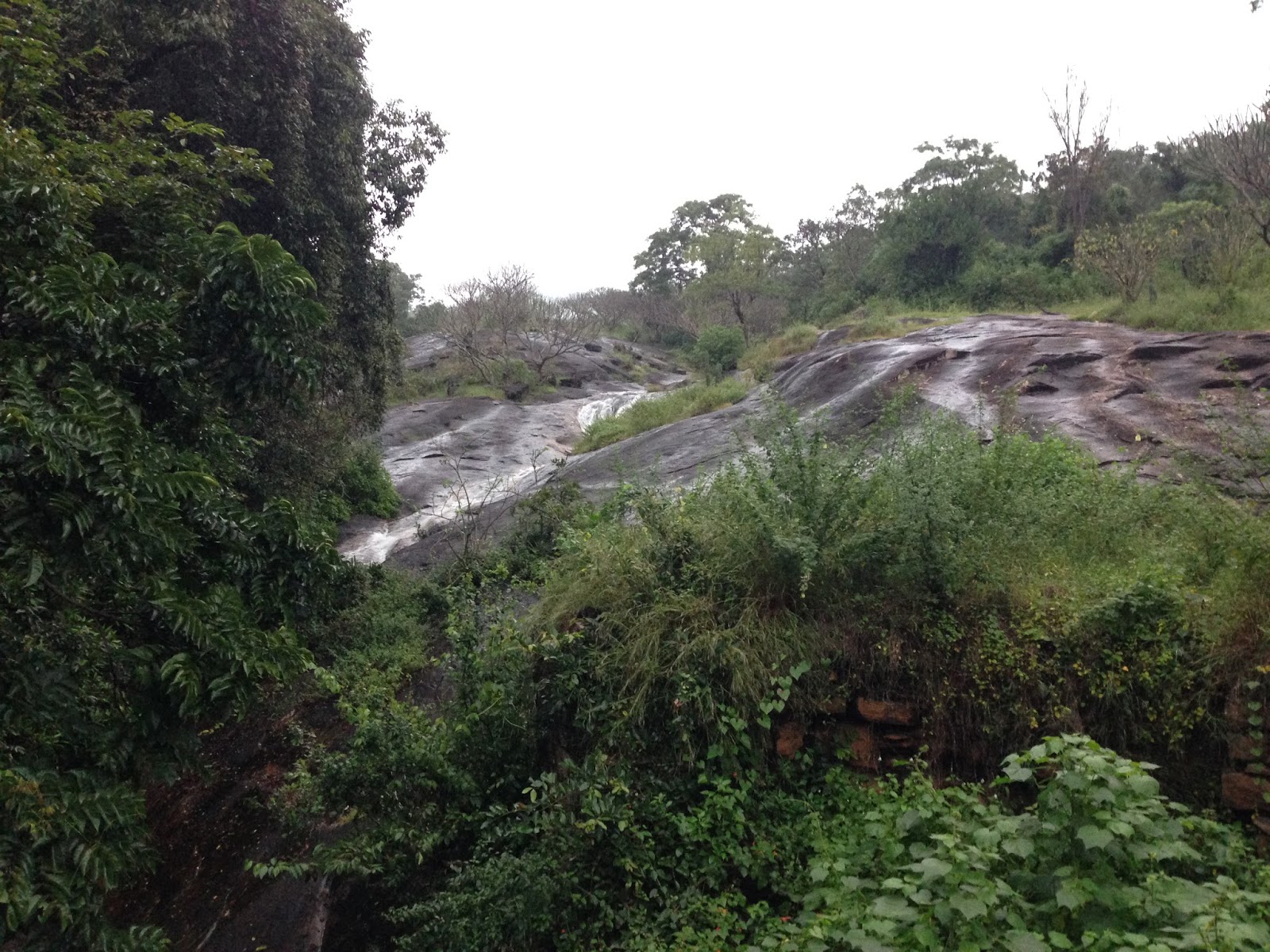
During the monsoon, numerous streams of unceasing rain runoff from the mountainside, leading to numerous waterfalls. Main include waterfalls Dudhsagar, Hogenakkal, Jog, Kunchikal, Sivasamudram, and Unchalli. Talakaveri is the source of the Cauvery River and the Sharavathi range is the source of the Tungabhadra. In Western reptiles, there are several artificial lakes and reservoirs, with the largest lake in Ooty (34 hectares (84 acres)) in the Nilgiris, Kodaikanal (26 hectares (64 acres)), and Berijam in the Palani Hills, Pookode lake, Devikulam (6 hectares (15 acres)) and Letchmi (2 hectares (4.9 acres)) in Kerala.


Западные Гаты, также известны как Sahyadri представляют собой горный хребет, который проходит параллельно западному побережью Индийского полуострова и находится полностью в Индии. Горы включены в список Всемирного наследия ЮНЕСКО и являются одним из восьми самых «горячих горячих точек" биологического разнообразия в мире.  Его иногда называют Большим Уступом Индии.  Хребет проходит с севера на на юг вдоль западного края плато Декан и отделяет плато от узкой прибрежной равнины, которая называется Конкан пролегающей вдоль Аравийского моря. В общей сложности тридцать девять объектов, включая национальные парки, заказники и резервных лесов были определены в качестве объектов всемирного наследия. Двадцать в штате Керала, десять в штате Карнатака, пять в штате Тамилнад и четыре в Махараштре

Хребет начинается вблизи границы Гуджарат и Махараштра, к югу от реки Тапти, и проходит около 1600 км (990 миль) через штаты Махараштра, Гоа, Карнатака, Керала и Тамилнаду, заканчивается в Каньякумари, в южной оконечности Индии. Эти холмы покрывают 160000 км2 (62000 квадратных миль) и образуют площадь водосбора для сложных приречных дренажных систем, которые истощают почти 40% Индии.  Западные Гаты продуваются юго-западными муссоными ветрами которые достигают плато Декан. Средняя высота  гор составляет около 1200 м (3,900 футов).

Район  хребта является одним из мировых десяти "самых горячих горячих точек биоразнообразия» и имеет более чем 7402 видов цветковых растений, 1814 видов не-цветущих растений, 139 видов млекопитающих, 508 видов птиц, 179 видов амфибий, 6000 видов насекомых и 290 видов пресноводных рыб ; вполне вероятно, что многие неоткрытые виды живут в западных Гат. По крайней мере, 325 глобально исчезающих видов встречаются в западных Гадах.

Западные Гаты образуют один из четырех водоразделов Индии, кормил многолетних рек Индии. Главные речные системы, возникающие в Западных Гат включают Годавари, Кавери, Кришна, Thamiraparani и Тунгабхадра. Большинство потоков, впадающих Западные Гаты присоединяются к этим рекам и несут с собой большие объемы воды во время муссонных месяцев. Эти реки текут на восток за счет градиента земли и сливаются в Бенгальский залив. Основные притоки включают Bhadra, Бхавани, Бхиму, Malaprabha, Ghataprabha, Hemavathi и Kabini. Перияр, Бхаратапужа, Netravati, Sharavathi, Mandovi и Zuari реки текут в западном направлении в сторону Западных Гат, впадают в Аравийское море.

Герсоппа в штате Карнатака, один из самых захватывающих водопадов в Индии
На реках были заслоны для гидроэнергетических и ирригационных целей с крупными резервуарами. Резервуары имеют важное значение для  коммерческого и спортивного рыболовства радужной форели, барбуса и обыкновенного карпа. Построено около 50 крупных плотин вдоль длины Западных Гат.  Наиболее заметным из этих проектов являются Koyna в Махараштре, Linganmakki и Sivasamudram в штате Карнатака, Меттур и Pykara в Тамилнаду, Parambikulam и Idukki в Керале.


Во время сезона муссонов, многочисленные потоки непрестанным стоком дождевой с горы стороны, ведут к многочисленным водопадам. Основные водопады включают Dudhsagar, Hogenakkal, Jog, Kunchikal, Sivasamudram и Unchalli. Talakaveri является источником реки Кавери и диапазон Sharavathi является источником Тунгабхадра. В Западных Гадах есть несколько искусственных озер и водохранилищ, с крупными озерами в Ути (34 гектаров (84 акров)) в Nilgiris, Кодаиканале (26 гектаров (64 акров)) и Berijam в Палани Хиллз, Pookode озера, Devikulam (6 га (15 акров)) и Letchmi (2 га (4,9 акра)) в штате Керала.

Thirumalali Naick Palace, Madurai, Tamil Nadu, India

 Thirumalai Nayak rule in Madurai between 1623 and 1659. He was the best-known of the thirteen rulers of Madurai in the 17th century. His contribution is many magnificent buildings and temples of Madurai. His kingdom was under constant threat from the Army of the Sultanate of Bijapur and other neighboring Muslim kingdoms, which he was able to successfully fight off. The territory comprised much of the old Pandya territories, which included Coimbatore, Tirunelveli, Madurai districts, Aragalur Tamil Nadu in the south, and some areas of the Travancore kingdom.

Thirumalai Nayak was a great patron of art and architecture and Dravidian architecture that evolved in the Madurai style. He rebuilt and reconstructed a number of old churches Pandya period. His palace, known as the Thirumalai Nayak is a notable architectural masterpiece.
He also built a beautiful palace called Thirumalai Nayak Mahal. The palace was divided into two main parts, namely Swargavilasa and Rangavilasa. There were the royal residence, theater, shrine, apartments, armory, palanquin place, royal bandstand, quarters, pond, and garden. The courtyard and ballroom are the main centers of attraction of the palace.

Legends

Thirumalai Nayak with a great personal interest in the construction of the temple in Madurai Pudumandapa. There are some documents that say that in one case, Sumandramurti Achari, chief architect, was so deeply immersed in work on the sculptural relief depicting a stone elephant eating sugar cane, that he did not notice that he is close to Nayak. Nayak gave him betel leaves and nuts. Thinking that it was the assistant, the architect took them and began to chew, not looking around. When he realized that it was himself Nyack, he was so badly frightened that injured two fingers. Driven by his duty, Nayak gave him many gifts.

On another occasion, the artist's son asked him for mangoes, in the off-season. He did not take any failures. Then Nayak ordered the boy to bring the golden mangoes from the palace. The boy was happy and this allowed his father to continue his work quietly. The "Mampazham" family was named Because of this incident, the family of the architect.

When the artist made the sculpture's Nayak wife and a piece separated from the hip. By a curious coincidence, the Queen actually had a scar in the same place, and there was a breakaway. The artist began work on another image, but it reappeared in the same place. Nayak's minister advised the artist to finish the statue leaving a flaw in place. When Nayak saw the sculpture, he was very angry, and the minister knew that his queen had a scar on her thigh. He sent for him, and as a punishment, he gouged out his eyes. After that Nayak repented. And the minister wrote a poem praise of the Goddess, begging her to return his sight if he was innocent. Goddess gave him back his sight. Minister became a famous poet Neelakanta Dikshitar. Among his works are "Shivalilamava", in the tradition of Lord Shiva in Madurai, and "Gangavatarana" on the descent of the Ganges to the earth. After this incident, the minister took leave of the king and was granted a village called Palamadai (Neelakanta Samudram) to the east of the modern Sankarnagar, in Tirunelveli.

 Тирумалаи Наяк правил в Madurai между 1623 и 1659. Он был самым известным из тринадцати  правителей Мадурая в 17 веке. Его вклад это многие великолепные здания и храмы Мадурая. Его королевство находилось под постоянной угрозой со стороны армий султаната Биджапура и других соседних мусульманских королевств, которые ему удалось успешно отбить. Территория охватывала значительную часть старых территорий Pandya, которые включали Коимбатор, Тирунелвели, Мадурай районы, Aragalur на юге Тамилнаду и некоторые территории королевства Travancore.

Тирумалаи Найяк был великим покровителем искусства и архитектуры и дравидийской архитектуры, которые эволюционировали в стиле Мадурая. Он перестроил и реконструировал ряд старых храмов периода Пандья. Его дворец, известный как Thirumalai Наяков, является заметным архитектурным шедевром.
Он также построил красивый дворец под названием Тирумалаи Наяк Махал. Дворец был разделен на две основные части, а именно Swargavilasa и Rangavilasa. Здесь находились, королевская резиденция, театр, святыни, квартиры, оружейная палата, место Паланкина, королевская эстрада, кварталы, пруд и сад. Двор и танцевальный зал являются основными центрами притяжения дворца.

Легенды

Thirumalaii Найяк с большым личным интересом относился к возведению Pudumandapa в храме Мадурай. Есть некоторые документы, которые рассказывают, что в одном случае, Sumandramurti Achari, главный архитектор, был так глубоко погружен в работу над скульптурным рельефом изображающим каменного слона еды сахарного тростника, что он не заметил что рядом находится сам Найяк. Найяк протянул ему листья бетеля и орехи. Думая, что это был помощник, архитектор взял их и начал жевать, не оглядываясь по сторонам. Когда он понял, что это был сам Наяк, он был так сильно напугался, что повредил два пальца. Движимый своим долгом, Наяк дал ему много подарков.

В другой раз сын художника просил у него манго, в не в сезон. Он не  принимал никаких отказов.  Тогда Найяк приказал, привозить мальчику золотые плоды манго из дворца. Мальчик был доволен и  это позволило его отецу спокойно продолжить свою работу. Из за  этого инцидента семья архитектора стала называться семья "Mampazham".

Когда, художник делал скульптуру супруги  Найяк-х и кусочек отделился от бедра. По любопытному совпадению, королева на самом деле имела шрам в том же месте, что и случился откол. Художник начал работу над другим изображением, но снова появился на том же месте появился след. Служитель Наяка посоветовал художнику закончить статую оставив изъян на месте. Когда Найяк увидел скульптуру, он очень разозлился, откуда  министр знал, что его королева имела шрам на ее бедре. Он послал за ним и в наказание ему выкололи глаза. После этого Найяк  раскаялся. А министр сочинил стихотворение похвалу Богине, умоляя ее,  вернуть ему зрение, если он невиновен. Богиня вернула ему зрение. Министр стал известным поэтом Neelakanta Dikshitar. Среди его работ "Shivalilamava",  в традициях Господа Шивы в Мадурае и "Gangavatarana" о спуске Ганги на землю. После этого инцидента министр взял отпуск у короля и был наделен деревней под названием Palamadai (Neelakanta Samudram) к востоку от современного Sankarnagar, в Tirunelveli.


середа, 8 червня 2016 р.

Traditional Weddings in India.


Weddings in India are accompanied by rituals and celebrations that go on for several days. Usually, it is going about 100 to 10,000 guests. It often happens that the guests are not very familiar with either the groom or the bride.
Though most Indian marriages are accomplished by the arrangement of families, some couples in urban areas, have "choosing relations," in which the partners have decided to marry each other without family or support. The traditional Indian wedding is usually the union of two families who have decided to join together.
Weddings in India are a mainstay in the social calendar of the whole society. Many wedding traditions originated in India. More and more are beginning to use Western features such as speech, first dance, and traditional wedding cake.
Traditional Marriages
Drawing from Doli which depicts a stretcher covered with a canopy where the bride class is delivered to the groom's house, in New Delhi (1843).
Wedding traditions differ in religion, caste, ethnicity, language, region, etc. Traditional Indian weddings are usually divided into several pre-wedding ceremonies and wedding ceremonies a day (consisting of Baraat, in Varmala and Satphere) and Vidaai. When a marriage has been agreed upon, the groom's father visits the bride's father.
The day before the expected arrival of the wedding procession, the bride's family prepares lavish treats to coax the groom (ki Shaadi tayaari) and decorated in beautiful places, usually on farms or hotel halls, where there is a sacrificial fire called marhwa. The bride adorns themselves with gold and diamond jewelry, as paint color illustration mehndi on the hands and feet. After prahadyat and other wedding ceremonies, including dressing in the bridal lehenga or saree. Grooms tend to wear [Sherwani] dress or costume designer. To end the marriage, the bride and groom walk in a circle (Fera) around the sacrificial fire.
Vidaai, is the day when the bride is officially sent to the groom's house. Many of the songs immortalized the moment when the bride leaves her "Babul Ka Ghar" or the house of his father. According to Hindu religious texts, Brahma created a man from his right shoulder and a woman from his left shoulder. The woman is called Vamangi or someone who is on the left side.
Throughout the wedding ceremony, the bride is sitting on the right side of the groom. That is in place for strangers. Only after Saptpadi, when the bride and groom exchanged vows in marriage, the wife can sit on the left side of her husband. The groom and the bride say about their duties and responsibilities in the family life of the priest.


 Свадьбы в Индии сопровождают ритуалами и празднованиями, которые продолжаются в течение нескольких дней. Как правило собирается около 100 до 10000 гостей.  Часто случается так, что гости бывают и не совсем знакомы ни с женихом ни с  невестой.
Хотя большинство индийских браков свершается по договоренности семей, но некоторые пары в городских районах,  "выбирают отношения", в которых партнеры решили вступить в брак друг с другом без участия семьи или помощи. Традиционная индийская свадьба это обычно соединение двух семей, которые приняли решение объединиться.
Свадьбы в Индии являются опорой в социальном календаре всего общества. Многие свадебные традиции возниклы в Индии. Все чаще начинают использовать и западные особенности, такие как речи, первый танец и традиционный свадебный торт.

Свадебные традиции различаются по религии, касте, национальности, языку, регионам и т.д. Традиционные индийские свадьбы, как правило, делятся на несколько  предварительно свадебных церемоний и свадебных церемоний в день (состоящий из Baraat, в Varmala и Satphere) и Vidaai. Когда брак уже согласован, отец жениха посещает отца невесты.

За день до предполагаемого прибытия свадебной процессии, семья невесты готовит щедрые угощения, чтобы задобрить жениха (Shaadi ки tayaari) в красивых и украшенных местах, как правило, на фермах или гостиничных холлов, где есть жертвенный камин называется marhwa. Невесты украшают себя золотом и ювелирными изделиями с бриллиантами, так же расписывают цветные рисунки Менди на руках и ногах.  После проходят и другие свадебные обряды, в том числе одевание свадебный lehenga или сари. Женихи, как правило, носят (Sherwani) платье или костюм дизайнера. Чтобы завершить брак, жених и невеста ходят по кругу (Фера) вокруг жертвенного огня.
Vidaai,  это день, когда невеста официально отправляется в дом жениха. Многие песни увековечили этот момент, когда невеста покидает ее "Babul ка Гар» или дом отца.  В соответствии с индуистскими религиозными текстами, Брахма создал человека из правого плеча и женщины из его левого плеча. Женщина называется Vamangi или тот, кто находится на левой стороне.
На протяжении всей свадебной церемонии невеста сидит на правой стороне жениха. То есть  на месте для незнакомых . Только после Saptpadi, когда жених и невеста обменялись клятвами в браке,  жена  может сесть с левой стороне от мужа. Жених и невеста говорят об их обязанностях и ответственности в семейной жизни священника.


вівторок, 7 червня 2016 р.

People and feelings in Meenakshi Temple, Madurai, Tamil Nadu, India

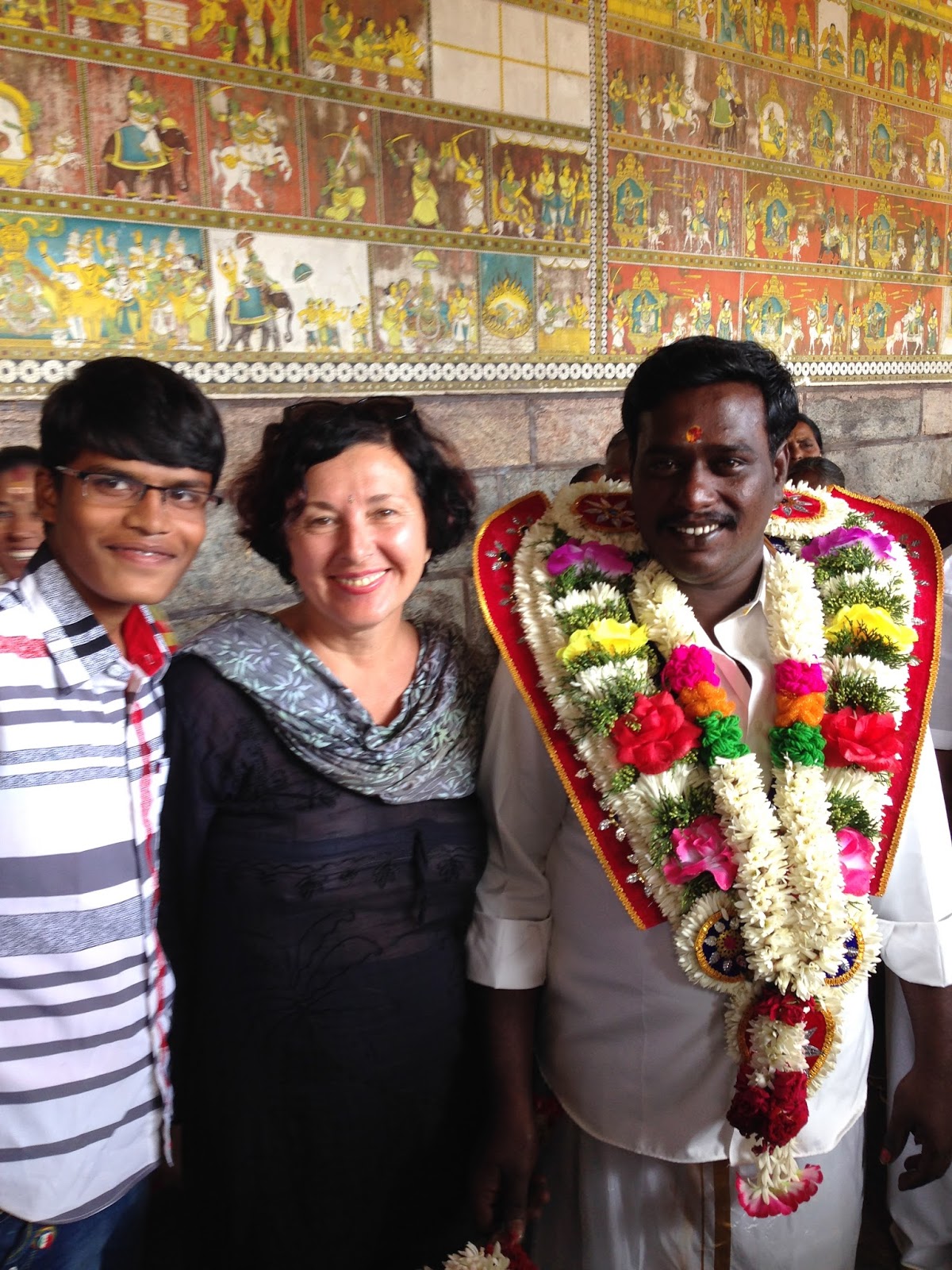
 I felt very, very good in the temple Meenakshi in Madurai. I liked the people, there were so many of them and they were full of love for each other and for us, the tourists. It was nice when I was allowed to attend the wedding ceremony when everyone with a desire posed for photos. I was even allowed to hold a tiny baby girl, decorated for the holiday, she was so small, it may be a month old. 
It seemed to me, that I merged in one embrace with all these fun and beautiful people!


В храме Минакши в Мадурае мне было очень хорошо. Мне нравились люди, их было очень много и они были полны любви друг к другу и к нам, затесавшимся туристам. Было очень приятно, когда мне позволии присутствовать на свадебной церемонии, когда все с желанием позировали на фотографии.  Мне даже дали подержать малюсенькую девочку, украшенную к празднику, она была такая маленькая, может быть один месяц отроду. Казалось, что я слилась в одном объятии с этими веселыми и красивыми людьми!


понеділок, 6 червня 2016 р.

Legend of Meenakshi.

Vishnu weds Meenakshi to Shiva

Meenakshi also Angayarkanni is the Avatar of the Hindu goddess Parvati, wife of Shiva - who is worshiped mainly in South India. It is also one of the few Hindu female deities, in whose honor the temple was built, famous as the Meenakshi Amman Temple in Madurai, Tamil Nadu. She is viewed as a form of Goddess Lalitha Tripurasundari of legends Dasa Maha Vidhya.

The legend of Meenakshi.
After Indra was killed the demon did not hurt anybody. This act brought a curse on him, forcing him to become a vagabond. During his travels, Indra felt lost, and no one showed him the way to redemption for his sin. After much wandering Indra was relieved of his suffering Shivalingam was in the woods so he built a small temple.
It so happened that at that time in South India ruled by King Pandiyan, he was called Malayadhwaja he ruled a small town Manavur, which was very close to the Shivalinga. He was the son of Kulashekara Panda. He learned about the Shivalinga and decided to build a huge Shiva temple in the Kadambavanam forest. He founded a great principality called Madurai.
The king was childless, and he looked for an heir. Shiva gave him for his prayer child Ayonija (not born from the womb). This child was three years old, and in fact, he was the embodiment of the goddess Parvati, wife of Shiva. She was born in the form of a fish eye and one additional breast. It has been said that the third chest will disappear when she met her future husband. She was named Meenakshi (ie fish) her name was composed of the words Meen (meaning fish) and akṣhi (ie, eyes). Meenakshi also means "one who has eyes like a fish." Pisces is said to feed their younger with her own eyes, as a goddess looks for his devotees. It is believed that one of her eyes is enough to our suffering to disappear.
It has grown to become the embodiment of Shiva-Shakti. After the king's death, she very ably managed the kingdom.
One day she went to the Himalayas and Shiva when she saw her extra breast disappear. Many of the gods and goddesses came to witness their marriage.
At weddings, gods refused food if Shiva has not fulfilled the majestic dance for everybody gathered on the spot. It was a dance of Chidambaram, the cosmic handsets in the presence of his wife Meenakshi. It embodies and unites all the vitality and beauty in one. In the end, Meenakshi was merged with shiva lingam and became the epitome of life and beauty.


 Минакши также Angayarkanni является Аватаром индуистской богини Парвати  супруги Шивы - которому поклоняются в основном Южной Индии. Она также является одним из немногих индуистских божеств женского пола, в честь которой выстроен храм, прославившийся как  Amman Temple Минакши в Мадурае, штата Тамилнад. ЕЕ рассматривают как форму богини Lalitha Трипурасундари,  из легенды Даса Maha Vidhyas.

Легенда о Минакши.
После того, как Индра убил демона, не пострадал никто. Этот поступок принес  ему проклятие, заставив его стать бродягой. Во время своих странствий Индра чувствовал себя потерянным, и никто не указал ему путь искупления его греха. После долгих скитаний Индра был освобожден от своих страданий  Shivalingam в лесу и поэтому он построил небольшой храм.

Так случилось, что в то время в Южной Индии правил король Пандиян, его называли  Malayadhwaja он правил небольшим городом Manavur, который был совсем рядом с  Шивалингамом. Он был сыном Kulashekara Пандьев. Он узнал о Шивалингаме и решил построить огромный храм Шивы в лесу Kadambavanam . Он основал прекрасное княжество под названием Мадурай.

Король был бездетным, и искал наследника царства. Шива подарил ему  за его молитвы  ребенка Ayonija (рожденного не из лона). Этому ребеноку было три года, и на самом деле он был воплощение богини Парвати супруги Шивы. Она родилась с рыбой в форме глаза и еще одной дополнительной грудью. Было сказано, что третья грудь исчезнет, ​​когда она встретила своего будущего мужа. Она была названа Минакши, (то есть рыба)  ее имя состояло из слов Meen (что означает рыба) и akṣhi (то есть глаза). Минакши также означает "тот, кто имеет глаза, как у рыбы". Рыбы, как говорят, кормят своих младших  своими глазами, так же богиня выглядит для своих преданных. Считают что одного ее взгляда достаточно, чтобы наши страдания исчезли.
Она выросла, чтобы стать олицетворением Шива-Шакти. После смерти короля, она очень умело управляла королевством.
Однажды она отправилась  в Гималаи и когда она увидела Шиву ее лишняя грудь исчезла. Многие из богов и богинь пришли засвидетельствовать их брак.
На свадебных торжествах боги отказались от пищи, если бы Шива не выполнил величественный танец для всех, собравшихся на месте. Это был танец Чидамбараме, космический танцец в присутствии его жены Минакши. Он воплощает и объединяет всю жизненную силу и красоту в одно целое. В конце концов Минакши была объединен с shivalingam и стала воплощением жизни и красоты.

Weding in Meenakshi Temple

Bride

Meenakshi Temple, Madurai, Tamil Nadu, India


Meenakshi Amman Temple is a historic Hindu temple located on the south coast he Vaigai River in Madurai, Tamil Nadu, India. It is dedicated to Parvati, known as Meenakshi and her consort Shiva. 
The temple is located in the heart of the 2500 year old city and is an important symbol for the Tamil people. About the temple was said in ancient times in Tamil literature. The current church was built between 1623 and 1655 AD. It is said that the temple was actually completed in the sixth century BC, during the time of Kumari Kandy. In the 14th century, under the leadership of the Muslim Mughal commander Malik Kafur plundered the temple and carried out all the valuables. It was rebuilt in the time of the ruler Vishwanatha Nayakar in the 16th century. Vishwanatha Nayak, who rebuilt the temple according to the Shilpa sastra. 
It has 14 towers of the gate, the height of them are about 45-50m. The highest is the south tower, 51.9 meters (170 feet). In the church there are two gold embossed vimanas, shrines over garbhagrihas (sanctuary) for the main deities. The temple attracts 15,000 visitors per day, about 25,000 visitors on Fridays, and receives an annual income of 60 million. In the temple there are about 33,000 sculptures. He is on the list of 30 best candidates for the "New Seven Wonders of the World." Temple is a prominent tourist attraction and one of the most visited tourist centers in the city. It hosts the annual 10-day festival Meenakshi Tirukalyanam, which is celebrated in April and May and attracts 1 million visitors.


Храм Минакши Аммане это исторический индуистский храм расположен  он на южном берегу реки Vaigai в городе Мадурай, Тамилнад, Индия. Он посвящен Парвати, известной как Минакши и ее супругу Шиве. Храм расположен в сердце  2500-летнего города и является важным символом для тамильского народа.  О храме  говорилось с древних времен в тамильской литературе. Хотя нынешний храм построен между 1623 и 1655 нашей эры.  Говорят, что храм был фактически достроен в шестом веке до нашей эры во времена Кумари Кандам. В 14-м веке, Моголы под предводительством мусульманского командующего Малика Кафура разграбили храм и вынесли из него все ценности. Он был восстановлен во времена  правителя Vishwanatha Nayakar в 16 веке.  Vishwanatha Наяк, который перестроил храм согласно Шилпа шастру. В нем располагаются 14 башнен ворот, высотой от 45-50m. Самой высокой является южная башня, 51,9 метров (170 футов). В храме находится два золотых рельефных vimanas, святынях над garbhagrihas (святилища) для главных божеств. Храм привлекает 15000 посетителей в день, около 25000 посетителей по пятницам,  и получает годовой доход 60 миллионов.  В храме имеется около 33000 скульптур. Он состоит в списке 30 лучших кандидатов для "Новых семи чудес света". Храм является выдающейся достопримечательностью и  одним из наиболее посещаемых туристических центров в городе.  Здесь проводится ежегодный 10-дневный фестиваль Минакши Tirukalyanam, который отмечается в апреле и мае и привлекает 1 млн посетителей.